When Animal Rights are Human Rights

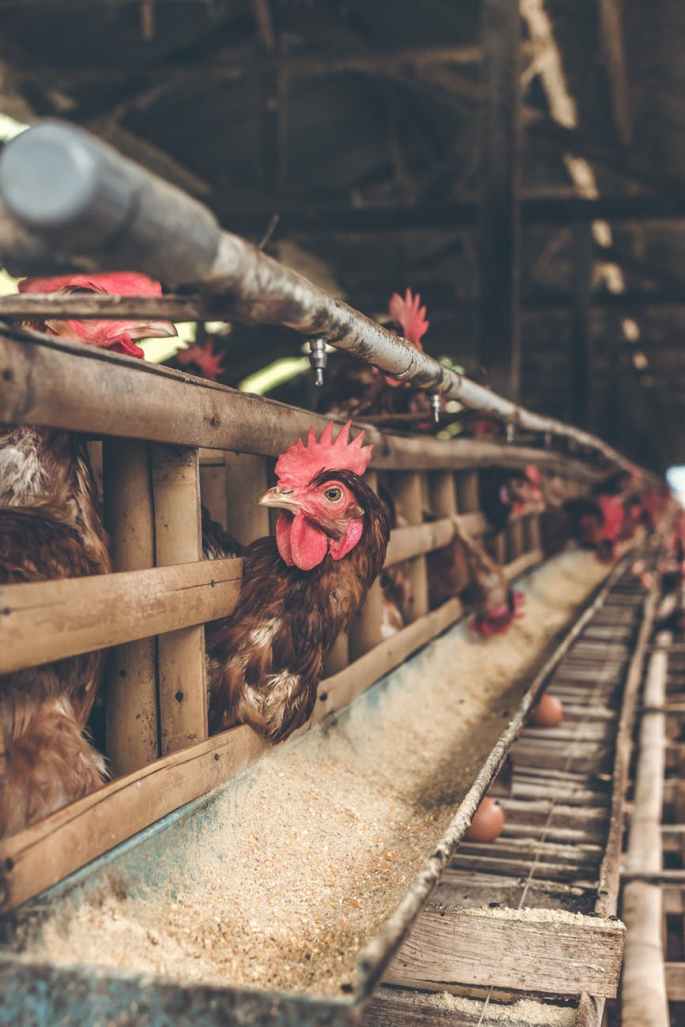
group of hen inside cage
Photo by Artem Beliaikin on Pexels.com

A sociological look at the relationship between animal suffering and human suffering.

This is a broad and important topic, but in this post I will focus on the intersection of humans and animals in modern factory farming. Part of the reason I decided to research and write this post is because of the common public sentiment that vegans “don’t care about humans, they only care about animals” and that we should really be thinking about all of the people living in poverty, violent areas and under oppression. But veganism touches directly upon those very human issues, and was part of my choice to go and to remain vegan.

We hear a lot of talk about PTSD among war veterans, survivors of assault, and civilians stuck in war-torn countries. What we don’t hear about in the media very much is PTSD among factory farm workers. I’m focused specifically on the factory farm workers because I am aware that many small, family owned animal-agriculture businesses often don’t operate at such a mind-bending magnitude and may not share in the rates of stress or PTSD-like symptoms as those subjected to the worst of modern animal farming (which now accounts for over 90% of the meat we eat, so those family farms are disappearing fast).

Most factory farm workers have a high quota of animals to be killed per hour or per day. In these factories, workers need to distance themselves from the brutality of the situation through cognitive dissonance. A worker in a chicken factory may slit throats endlessly as chickens round off a conveyor belt, but no matter which way the utilitarian method is presented, the worker is essentially subjected to a full-day shift of non-stop throat slitting and/or stunning animals. Workers hear the constant screams of animals, and those in pig or beef farms wrestle with these gentle giants as their screams form a constant cacophony on the kill floor. Without cognitive dissonance, there is no way to separate the act from your conscience. Even with dissonance, many return home and find the work conditions follow them. Many academic studies (a couple listed in the links) have found a direct correlation between factory farm workers and increased rates of violent crime such as spousal abuse and sexual assault. As well, it’s noted that there is an increased rate of alcoholism and drug abuse by people working in these conditions.

To make matters even more complex on the sociological front, one will find that the bulk of factory farm workers are people already oppressed or living in difficult circumstances:

“Historically, a lot of slaughterhouse workers have been African American but recently there has been a rise in the number of Latin American workers to the profession. People of color are subject to systemic racism which often leaves them living in poorer communities and therefore more likely to have to take jobs in slaughterhouses. This work then denies them social mobility due to the mental, emotional and physical impact the job has.” (https://www.livekindly.co/slaugterhouse-worker-violent-behaviour/)

The recent ICE Raids in the southern United States at poultry factory farms found that over half of the workers were illegal immigrants.  (https://www.npr.org/2019/08/10/750172206/ice-raids-hit-poultry-processing-plants-that-rely-on-latino-immigrant-labor) Their pay is low, the conditions are almost always unsanitary, and they have little chance of upward mobility whether or not they are legally residing in the country. The marginalized, poor immigrants, and especially illegal immigrants, have few choices for other lines of work and become easy targets for the horrible and underpaid work conditions of the Big Meat industry. I could go on about this for several blog posts, but I encourage readers to explore the studies done (you can find more on Google Scholar) and educate yourself on the data and the personal experiences of these people.

Another factor is the health of the people who work in these farms. Many studies, reports, and health and safety inspections have found the working conditions unfit for humans. As most of these animals are raised in small conditions, pumped with hormones, antibiotics and/or other horrors, and then living in their own waste products, we can be sure that the salmonella, e.coli and other unwanted viruses and parasites make their way over to humans. Jonathan Safran Foer’s informative and eye-opening book Eating Animals notes that up to 90% of factory farmed chickens killed have salmonella on them. Most of these chickens are soaked in chlorine baths before being sent to the processing plant.

Factory farm workers are subject to breathing in animal waste products at extremely high levels, touching body parts and equipment that is contaminated with bacteria and dangerous pathogens, as well as heightened potential for injury due to the speed at which they are supposed to work. Many workers develop long-term illnesses from working in these conditions. For those working in the U.S. or countries where they don’t have adequate access to affordable healthcare, many struggle even more with complications from illnesses.

The physical and mental health of factory farm workers is constantly threatened by the work they do.

Unlike food as a general category, meat as a sub-category is becoming increasingly irrelevant. If you don’t live in a food desert or in an area where there is no access to vegan options, then I encourage you to stop and think about why you still consume animal products. The human communities with the longest life-span are vegetarian or vegan; the Seventh Day Adventists and the Okinawans off the coast of Japan. Many nutritionists, dietitians and doctors advocate for a healthy plant-based diet and can show people how to do it in a way that can be long-term. As eating meat becomes irrelevant, then so does struggle of the people who suffer physically and mentally for your processed chicken wing cravings.

This isn’t all to say that vegan foods are always ethical. There’s growing awareness of abuse in the cashew industry of India, and many are well aware of the ethical issues related to banana production in Central America. Those are also human rights issues that need to be addressed and tackled. But unlike meat… fruits, vegetables, grains and legumes, when paired with ethical standards for production, won’t require any animal deaths and will also contribute to a reduction in food industry workers struggling with PTSD and other mental health issues. Removing animals from our food production removes a layer of human suffering and reduces the unnecessary deaths of countless animals.

With Beyond Meat burgers owning the stock exchange,  non-dairy milk and cheese threatening and contributing to the decline of the dairy industry (which has its own issues), and a plethora of blogs, books, and websites dedicated to showing us how to eat a healthy plant-based diet… why still eat meat? James Cameron’s new documentary “The Game Changers” features male athletes breaking records and living in peak health while eating a balanced vegan diet… so if the fittest man in the world is vegan, what can help you start the journey towards veganism?

Links and Some Sources:

https://www.ncbi.nlm.nih.gov/pubmed/28506017

https://link.springer.com/article/10.1007/s10611-011-9297-2

The Psychological Damage of Slaughterhouse Work

https://mercyforanimals.org/slaughterhouse-workers-have-ptsd-from-killing

https://www.theguardian.com/commentisfree/2018/nov/19/christmas-crisis-kill-dinner-work-abattoir-industry-psychological-physical-damage

https://www.businessinsider.com/meat-industry-sanitation-workers-2018-1

Broadening the Cultural Image of Veganism

animals-arabian-camel-camel-1707965.jpg

In this post I want to explore the phenomenon that I’ve noticed occurring in media and social media rhetoric surrounding vegans. It’s common to witness people remarking that veganism is expensive, for white, upper-middle class people, riddled with privilege, or, worse: a fad diet movement.

Within all of these comments or articles there is a common thread: somehow veganism as an ethical stance can be dismissed by association. There are many red herrings that get away from the main question any ethical vegan has; which is to simply ask whether it is ethical to kill and consume animals or use their secretions for our food. This red herring is among many that helps to maintain the cultural norm of eating animals and avoiding the ultimately personal question of whether the consumption of animal products is ethical or necessary. When we associate and therefore dismiss veganism because of a created and maintained public image, we do a great disservice to the culturally diverse voices found within the movement.

As many people argue that veganism is a “new” growing trend, they ignore cultures and religious movements that have been vegetarian or vegan for millennia. Among them are Jains, Hindus, many Buddhists, sects of Christianity like certain monastic communities and Seventh-Day Adventists, the Rastafari movement, and some North American Indigenous communities. (I will eventually explore each of these in their own posts under the lenses of religious studies and anthropology.)

The more I explore veganism, the more I uncover these often unheard voices, voices that are dismissed as quiet or seen as outliers. I could probably write a short book on all of the movements, collectives and communities that are not, in fact, wealthy and/or white. Since this is a blog, I’ll make a case using several movements I’ve encountered or learned about recently.

A fast-growing movement right now is Black Vegfest (https://blackvegfest.org/), a festival for African-Americans and allies to learn about veganism, share stories, knowledge and ideas, and to enhance intersectionality in struggles for health, environmental justice and animal rights. It’s been happening in New York and there is discussion of expanding to other cities across the United States.

We also have indigenous scholars and elders advocating for modern custodianship of the earth through veganism. They run the gamut from Eastern Canadian Mi’kmaq scholars to Native Americans across the USA. Indigenous voices in the movement have come with controversy at times, especially because the traditional use of animals for food, clothing and other necessities is a deep and important part of many historical cultures on this continent. In order to bring this movement out of its current image, we do have work to do on decolonizing veganism through active dialogue, creating food security and availability in marginalized communities, and noting which facets of the movement may be continuing forms of oppression; which frequently includes indigenous communities.

Many indigenous vegans make the argument that veganism/vegetarianism can be compatible, and in many cases, has become necessary in the face of such deep environmental degradation (which also, of course, has links to historical colonialism). Navigating difficult waters between tradition, autonomy and our modern food systems/inequalities makes indigenous voices needed and crucial in the advancement of animal rights and the protection of our earth.

see: https://www.vice.com/en_ca/article/7xd8ex/this-indigenous-scholar-says-veganism-is-more-than-a-lifestyle-for-white-people

https://humanrightsareanimalrights.com/2015/04/03/margaret-robinson-indigenous-veganism-feminist-natives-do-eat-tofu/

https://newsmaven.io/indiancountrytoday/opinion/native-american-and-vegan-yes-it-s-possible-i-ve-done-it-for-18-years-JoTkBY5SeEqFxHJgTg6p6g/

In the US Latino community, many are also working to remove the whitened image of veganism and also provide financially viable vegan food for people, as one Latino vegan chef notes, “I wanted to find a good vegan taco de carnitas,” he said, “and I couldn’t find an affordable one. They were only at affluent vegan hipster spots.” When we speak of intersectionality in veganism, this includes the creation of restaurants, stores and spaces that are affordable and accessible, and also led by people of colour and other minority groups.

https://www.npr.org/sections/thesalt/2018/07/19/629629261/carne-asada-hold-the-meat-why-latinos-are-embracing-vegan-mexican-cuisine

Vegan Feminist Network wrote a piece for Asian History Month in Canada by highlighting many amazing Asian vegan women and the work that they do both for animals and feminism/intersectionality.

http://veganfeministnetwork.com/history/vegan-asian-womens-history/)

In some Muslim communities, people are reorienting traditions in ways that don’t require eating or harming animals in rituals and feasts. Speaking to fellow brothers and sisters, a movement of compassion extended to animals and based upon the Qur’an is inspiring hundreds, perhaps thousands, of Muslims to adapt ancient practices for both religious and environmental reasons.

https://www.livekindly.co/vegan-muslims-create-new-qurbani-sacrifice-tradition/

https://mvslim.com/vegan-muslims-on-the-rise-an-interview-on-eating-plant-based-and-living-cruelty-free/

Redefining the cultural image of veganism will take work. It will take the efforts of both minority/marginalized communities, and vegan allies who are knowledgeable about the these communities/voices to share their work as well. Broadening the cultural image and increasing the accessibility of veganism will also mean that we confront classism, racism and other barriers that prevent individuals and communities from taking veganism seriously. The movements and work mentioned above are a tiny start, a jumping-off point that I hope even one person reading this has a chance to look at and share elsewhere. The movement is far from perfect, but the more voices we have, the more we listen to, and the more work we do to address the issues in our movement, the stronger and more cohesive we can become.

How the Journey Began

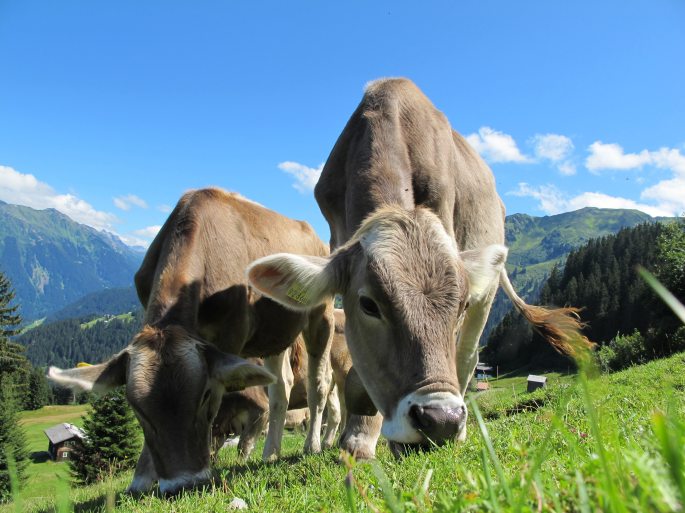
animals-cattle-countryside-64231.jpg

Hello Curious Creatures,

I’m assuming you’re reading or following my new blog because you are curious about a wide variety of nerdy topics like I am. Having completed an undergraduate degree in religious studies with a double minor in anthropology and psychology, followed by a masters degree in the philosophy of religion, I can say that between my electives and official programs I would be very happy to stay in school forever. Political science, biology, economics, philosophy, geography, linguistics, history and more have drawn me in with their magic.

When I took a course in religion I found intersections with topics in my other courses. Seeing the way that everything overlapped helped to shape my understanding of this complex world as entirely interconnected. It humbled me to see how little I knew, and excited me knowing that I will be learning everyday until I die.

Over the past year I began to learn more about animal welfare and veganism, which was jumpstarted by my vegetarian partner and a dabble into Veganuary 2018 (a global movement that encourages people to try being vegan for the month of January). Though my transition to actually becoming a vegan took another eleven months, the seeds had been planted. As my curiosity mounted I began to read literature on the subject, watch YouTube vlogs, discover podcasts, and have conversations with vegans I know. Having amassed this bulk of knowledge, I could no longer find justification for consuming animal products. But how did I go from a meat-eating “excuse-tarian” to a vegan? By examining a variety of lenses, listening to an array of voices and allowing my love of learning to school me in all things animal rights related.

This blog is the product of my ongoing exploration. As someone who now works in the field of diversity and inclusion, with friends from a huge diversity of ethnicities, religions, cultures and identities, I wanted to push back against the notion that veganism is a movement for predominantly well-off white people. Veganism/vegetarianism has ancient roots in spiritual traditions across the globe, historic roots in a variety of cultures, and sweeping justifications from diverse voices and varying modern academic disciplines; these will be explored.

I want to be intersectional and interdisciplinary in my exploration. So I invite anyone reading this to comment or message me with suggestions of things that matter to you, things that you would love to learn more about, or what your thoughts are on what I’m sharing. As the vegan movement moves forward, we need it to be accessible, open, curious and supportive. I want to be a part of the vegan movement that shows it in its most compassionate and articulate forms, advocating for the animals by inviting people in and meeting them where they’re at.

Before I sign off for today I want to share some resources that really opened my mind and influenced me in my transition to veganism. I will explore some of these and their concepts in later posts, but for now, enjoy whatever intrigues you:

For those into SOCIOLOGY/FEMINISM/HISTORY: (book) “The Sexual Politics of Eating Meat” by Carol J. Adams. Not just a good read for women/feminists, but also gets into masculinity and meat. I was utterly shocked that I hadn’t made the connections of objectification and sexualization before. Just take a peak at the centre photos of the book comparing the sexualized ads of women with those of a pre-cooked turkey on a stripper pole… or the banned ad by Burger King featuring a woman opening her mouth wide to a giant sub with a very sexual caption. You’ll never look at those seductively-dancing sexualized Thanksgiving turkey ads the same again. *shudders*

For those into PHILOSOPHY/ETHICS: (book) “Animal Liberation” by Peter Singer. Considered the classic that started the movement, it is dense, fascinating, at times horrifying when he discusses factory farms, but a good source for those who want to challenge their critical thinking skills.

For those into MEMOIRS/ENVIRONMENT/HEALTH: (book) “Eating Animals” by Jonathan Safron Foer. This is now a Netflix doc narrated by Natalie Portman, so you can skip the book and hear/see the story and all of Safron’s explorations as a sometimes-vegetarian who decided to learn about and write a book after having a child and deciding whether to raise him vegan or not. It is equal parts emotional and scientific, a rare and compelling combo.

For those into SPIRITUALITY: (YouTube doc) “H.O.P.E – What You Eat Matters”. It includes interviews and spiritual concepts favouring vegetarian/veganism from various traditions like Hindu, Jain, Christian, Jewish etc.

For those into PRACTICAL THINGS and CULTURE(S): (podcast) Food for Thought: The Joys and Benefits of Living Vegan, free on iTunes. How should we best communicate with others? How do we get proper nutrition? Why are certain animal meats taboo to some cultures and not others? Along with episodes on things like the topics above. It’s AWESOME. and very non-judgmental.

For those in LINGUISTICS/SEMANTICS: “Animology” by the same host as Food for Thought. It explores how we use language to separate ourselves from animals, justify consumption and more. It also looks at historical developments of sayings like “you’re a pig!” etc. Ever wonder why we don’t say we’re eating cow?

For those into YOUTUBE PERSONALITIES/CHANNELS: 
Earthling Ed has some great, compassionate debates (no screaming-angry–judgy-vegan-vibes) with people in the streets of the UK. He also has lectures and vlogs on his work.
Unnatural Vegan debunks a lot of myths about nutrition and health (including some not-so-accurate things in vegan documentary “What the Health”).
Pick Up Limes is great for recipes, wellness and lifestyle tips by a vegan nutritionist.

Thanks for reading!